

As an Amazon Associate I earn from qualifying purchases. This site participates in affiliate programmes, including Amazon Associates and Affilae. If you purchase through our links, we may earn a commission at no extra cost to you.
Polaroid Go Gen 2 vs Instax Mini 12: Which to Buy?
Pocket-sized Polaroid Go Gen 2 or cheaper Instax Mini 12? Photo size, film cost, battery and ease of use compared — verdict for every use case.
In brief
Our 2026 comparison of 2 instant cameras ranks the Fujifilm Instax Mini 12 first. The Instax Mini 12 wins with superior image quality, lower cost per photo and a richer film ecosystem. The Go Gen 2 appeals with its ultra-compact format and Polaroid charm.
- Our pick
- Fujifilm Instax Mini 12
- Best price
- from €71.90
- Products compared
- 2
- Criteria assessed
- 5
Summary
The Instax Mini 12 wins with superior image quality, lower cost per photo and a richer film ecosystem. The Go Gen 2 appeals with its ultra-compact format and Polaroid charm.
Comparison criteria
Products compared
Detailed comparison
| Criteria | Top choice 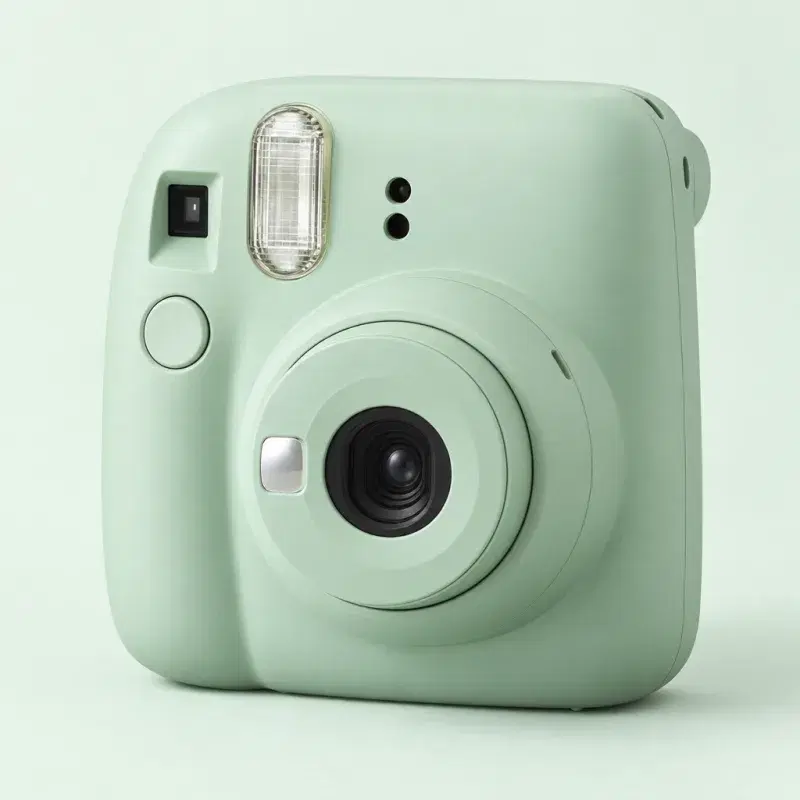 |  |
|---|---|---|
| Price | from €71.90 | from €89.99 |
| Format film | Instax Mini | Polaroid Go |
| Format impression | 62×46mm | 67×54mm |
| Batteries | 2×AA | - |
| Mise au point | Automatique | - |
| Déclencheur selfie | Oui | - |
| Flash | Automatique | Automatique |
| Offre MN Photo Vidéo | 86,90 €, en stock le 24/07/2026 | - |
| Batterie | - | Lithium-ion rechargeable USB-C |
| Double exposition | - | Oui |
| Timer selfie | - | Oui |
| Buy | Check current price →Read our review | Check current price →Read our review |
Fujifilm Instax Mini 12
Fujifilm
from €71.90
Polaroid Go Gen 2
Polaroid
from €89.99
Instax Mini 12 vs Polaroid Go Gen 2: The Compact Duel
Which to buy? For most people I recommend the Instax Mini 12: its film costs roughly half as much (about 0.80–1€ per photo vs 1.50–2€ for the Go), and it produces more consistent, sharper prints. Buy the Polaroid Go Gen 2 only if pocket-size and the classic Polaroid look matter more to you than running cost.
One Saturday in February, I was at brunch with friends in the Marais. One had the 🛒 Polaroid Go Gen 2 →, tiny and cute, sitting between the avocado toast plates. The other had my 🛒 Instax Mini 12 → Mint Green. We spent the whole brunch comparing prints. What follows is the extended version of that brunch discussion.
Stéphanie's Choice
I'm keeping the Mini 12 for everyday use. But I have an inexcusable soft spot for the Go.
The Go Gen 2 fits in a jeans pocket. Literally. One evening in Montpellier, I slipped it into my back pocket to go out for a drink. No bag, no strap. That's impossible with any other instant camera. This freedom is intoxicating.
Except the Mini 12's photos are sharper, more consistent, and cost half as much. And after a few weeks, that weighs on the balance. My advice: if you only have one camera, get the Mini 12. If you want an ultra-discreet pocket companion as a complement, the Go is a little marvel.
Instax Mini 12: strengths and weaknesses
Strengths
- Consistent image quality: the Mini 12's automatic exposure is the most reliable in its category. Out of 10 photos in the same conditions, 8 to 9 prints are well exposed. This success rate makes the difference over time.
- Unbeatable cost per photo: Mini film comes to about 0.80–1€ per photo in twin packs. It's among the most affordable instant films on the market, well ahead of Polaroid Go (around 1.50–2€) or Square (about 1.30€).
- Rich film ecosystem: the Mini comes in white, black and white, Macaron, Rainbow, and dozens of limited editions. No other format offers as much variety.
- Intuitive selfie/macro mode: rotating the lens to switch to close-up mode is simple and mechanical. No menu, no button — you twist and it's ready.
- Universal availability: film and AA batteries can be found everywhere — supermarkets, pharmacies, newsagents. No internet dependency.
Weaknesses
- Non-rechargeable AA batteries: unlike the Go Gen 2 and its USB-C battery, the Mini 12 runs on batteries. You need to buy them regularly or invest in rechargeables + charger.
- Less original design: the Mini 12 is pretty, but it's become so common it surprises no one. The Go Gen 2, with its cube format and Polaroid rainbow, attracts more attention.
- No double exposure: impossible to overlay two images. This is a gap for creatives who want to experiment.
- No selfie timer: for self-portraits without a phone timer, you need to improvise. The Go Gen 2 integrates this natively.
- Standard rectangular prints: the 62x46mm format is practical but unremarkable. The Go or SQ40's square prints have more personality.
Polaroid Go Gen 2: strengths and weaknesses
Strengths
- The most compact on the market: 83 x 105 x 62 mm, 242 g. It literally fits in a jeans pocket. No other instant camera can say the same.
- USB-C rechargeable battery: one cable for phone and camera, no more batteries to buy. The battery lasts about 120 photos per charge.
- Built-in double exposure: the Go Gen 2's flagship creative mode. Overlay two images on one print for artistic results.
- 9-second selfie timer: long press the shutter, you have 9 seconds to get in position. Simple and effective.
- Unique Polaroid aesthetic: the rainbow, the iconic white frame, chemical development. It's the Polaroid experience in miniature.
Weaknesses
- Tiny prints: 67 x 54 mm with an image area of 47 x 46 mm. Fine details get lost, group portraits are illegible. It's the smallest format on the market.
- Expensive and rare film: around 1.50–2€ per print, and Go film is only found online or in specialist shops. Forget the corner supermarket.
- Unpredictable rendering: typical of Polaroid, exposure varies from one print to the next. Charming for some, frustrating for others. The failure rate is higher than Instax.
- No manual control: impossible to force the flash, adjust brightness or choose a mode. Everything is automatic, for better and for worse.
- Only 16 shots per pack: that's double an i-Type pack, but Go packs are more expensive per print. The film budget climbs fast.
Instax Mini 12 or Polaroid Go Gen 2 — which takes better photos?
The Instax Mini 12 takes better photos for most people, and image quality is the deciding criterion for me. Its automatic exposure is more reliable and consistent than the Go Gen 2's: over a series of 10 photos in the same conditions, the Mini 12 produces 8 to 9 well-exposed prints, while the Go Gen 2, with Polaroid's more random rendering, delivers about 6 to 7. Instax Mini prints are sharper, with colours more faithful to what the eye sees. Go prints have undeniable vintage charm — warm tones, visible grain, slight artistic softness — but that organic look is also less predictable. The formats differ too: the Mini is a rectangle with a 62x46mm image area, the Go a small square with a 47x46mm image area, the smallest format on the market, which limits fine-detail legibility. So it comes down to taste: Fujifilm precision and consistency, or Polaroid character and surprise.
Running costs: the gap hurts
Second clear Mini 12 win. Instax Mini film costs between 0.80 and 1€ per photo in twin packs. Polaroid Go film costs between 1.50 and 2€ per photo. Over 100 photos, the gap reaches 50 to 100€ — literally the price of a second camera.
And the film selection isn't comparable. Instax Mini comes in colour, black and white, rainbow, macaron, and dozens of limited editions. Go is only available in colour and black and white. The Fujifilm ecosystem is significantly richer.
Comparison Table
| Criterion | Instax Mini 12 | Polaroid Go Gen 2 |
|---|---|---|
| Camera price | ~80€ | ~95€ |
| Price per photo | ~0.80-1€ | ~1.50-2€ |
| Print format | 86x54mm (rectangle) | 67x54mm (miniature square) |
| Image area | 62x46mm | 47x46mm |
| Power | 2 AA batteries | Li-ion USB-C battery |
| Weight | ~255g | ~242g |
| Dimensions | 103 x 127 x 57mm | 83 x 105 x 62mm |
| Exposure | Automatic | Automatic |
| Flash | Automatic | Automatic |
| Double exposure | No | Yes |
| Selfie timer | No | Yes (9 seconds) |
| Selfie mirror | Yes | Yes |
| Macro/close-up mode | Yes (lens rotation) | No |
| Charging | Batteries (not rechargeable) | USB-C |
| Available films | 10+ variants | 2 (colour, B&W) |
| Autonomy | ~100 photos/batteries | ~120 photos/charge |
| Development | 90 seconds | 10-15 minutes |
Design and portability
The Polaroid Go Gen 2 is the smallest Polaroid ever manufactured. That's a massive argument. It fits in the palm of your hand, slips into a jacket pocket. Its cubic design and bold colours (white, black, red) are resolutely fashionable.
The Mini 12 is slightly larger, with its pastel curves (sage green, blue, lilac, cream, black). The size difference between the two is minimal in practice — both travel without issue. But the Go pushes the concept of compactness to the extreme, and you feel it.
On power: the Go has a rechargeable USB-C battery, a real plus for mobile use. The Mini 12 with its AA batteries is more old school, but batteries are available in any corner shop on the planet at 2am. Each has its advantage.
Features: the Go has two tricks
The Go Gen 2 has two features the Mini 12 lacks: double exposure and the selfie timer. Double exposure overlays two images on one print — it's fun and creative. The timer gives 9 seconds to get into frame.
The Mini 12 counters with its selfie/macro mode (lens rotation) and slightly more sophisticated automatic exposure. Selfie mirror on both.
Usage scenarios: which to choose for your situation
For a birthday gift (teen or adult)
Go with the Mini 12. The film is cheaper, so the person can actually use it without breaking the bank. The colourful film ecosystem (Macaron, Rainbow) adds a festive touch. And consistent quality avoids disappointment.
For outings and travel
The Go Gen 2 has the edge. Its size lets it slip into any pocket. No bag needed, no strap. The USB-C battery recharges on the go with a power bank. It's the camera of the unexpected.
For a wedding or event
Mini 12, no discussion. The lower cost per photo is crucial when you're shooting 50 to 100 photos in one evening. Consistent exposure guarantees reliable results for guests. And coloured films add a festive touch.
For a teenager
Mini 12 again. Affordable film allows intensive use without parents crying over the budget. Film availability in stores avoids stock-outs. And the colourful design appeals to this age group.
For a creative / artist
The Go Gen 2 if you like double exposure and organic rendering. The Mini 12 if you prefer sharpness and predictability. It's a question of personal aesthetics. The Polaroid rendering has a grain and warmth that digital filters can't reproduce.
User feedback: what real owners think
We compiled reviews from owners of both cameras on Amazon.com and photography forums.
Mini 12 — what they say:
- "My second Mini (after the 9). Quality has really improved." — loyal range users
- "Perfect for parties. Everyone wants to participate." — group success
- "The batteries are the only annoying thing. But you get used to it." — recurring minor frustration
- "Film is so affordable I don't hesitate to shoot anymore." — low cost changes habits
Go Gen 2 — what they say:
- "I always have it on me. It's the first camera that replaced my smartphone in my pocket." — compactness is a massive argument
- "Photos are cute but honestly tiny." — print size divides
- "Double exposure is a game. You never know what will come out." — creative side appeals
- "Film is expensive and hard to find. I order 5 packs at a time on Amazon." — the ecosystem polarises
Total cost comparison over 1 year
Scenario: 5 photos per week, or 260 photos per year.
| Item | Mini 12 | Go Gen 2 |
|---|---|---|
| Camera | 80 EUR | 95 EUR |
| Films (260 photos) | 182 EUR | 260 EUR |
| Power | 9 EUR (AA batteries) | 0 EUR (USB-C) |
| Year 1 total | 271 EUR | 355 EUR |
| Cost per photo | 1.04 EUR | 1.37 EUR |
The Mini 12 saves about 84 EUR over one year. Over two years (without rebuying the camera), the gap climbs to 168 EUR. That's significant.
FAQ
Instax Mini 12 or Polaroid Go Gen 2 as a gift?
The Mini 12 is the safer choice: simpler, cheaper film and better image quality. The Go Gen 2 appeals to Polaroid brand fans.
Which has the best value for money?
The Mini 12, hands down. Cheaper film, more consistent results, and the camera itself often costs less.
Can you swap film between the Mini 12 and Go Gen 2?
No. The Mini 12 uses Instax Mini film and the Go Gen 2 uses Polaroid Go film. The formats are incompatible.
Which is more compact?
The Polaroid Go Gen 2 is the smallest Polaroid ever made. It is slightly more compact than the Mini 12.
Which takes better photos?
The Mini 12 produces sharper, more consistent images. The Go Gen 2 has a more organic, unpredictable Polaroid look.
Verdict
The Fujifilm Instax Mini 12 is my recommendation for the vast majority of situations. Better photos, more consistent, for less money, with a far richer film catalogue. It's the rational choice.
The Polaroid Go Gen 2 remains an appealing option for Polaroid fans, those who want the most compact format possible, or creatives attracted to double exposure. Its unique rendering has a charm the Mini 12 can't replicate — and its pocketability is formidable.
In summary: the Mini 12 for quality and economy, the Go Gen 2 for style and nostalgia.
At a glance: our verdict in one look
| Situation | Our recommendation |
|---|---|
| First instant camera | Mini 12 — quality, economy, simplicity |
| Pocket camera / second camera | Go Gen 2 — ultra-compact, USB-C battery |
| Teen gift | Mini 12 — affordable film, multiple colours |
| Original adult gift | Go Gen 2 — unique design, Polaroid charm |
| Wedding / event | Mini 12 — more reasonable cost per photo |
| Creativity / double exposure | Go Gen 2 — only one of the two to offer it |
| Light travel | Go Gen 2 — the only one that fits in jeans |
| Tight budget | Mini 12 — significantly cheaper film |
Instax Mini 12 on Amazon | Polaroid Go Gen 2 on Amazon
Related Articles
- Mini 11 vs 12 — How the Mini 12 compares to its predecessor before you decide.
- Best Instax Mini 2026 — Our top Instax Mini picks ranked for 2026.
- Best Instant Cameras 2026 — Every format compared, from Mini to Wide.
Related guides