

As an Amazon Associate I earn from qualifying purchases. This site participates in affiliate programmes, including Amazon Associates and Affilae. If you purchase through our links, we may earn a commission at no extra cost to you.
Polaroid Now Gen 2 vs Instax Mini 12: 6 Differences Tested
Polaroid Now Gen 2 vs Instax Mini 12 tested 2026: 6 key differences. Format, price, photo quality — complete buyer's guide.
In brief
Our 2026 comparison of 2 instant cameras ranks the Fujifilm Instax Mini 12 first. The Instax Mini 12 offers the best value for money thanks to affordable films, while the Polaroid Now Gen 2 wins with its iconic format and large prints.
- Our pick
- Fujifilm Instax Mini 12
- Best price
- from €71.90
- Products compared
- 2
- Criteria assessed
- 5
Summary
The Instax Mini 12 offers the best value for money thanks to affordable films, while the Polaroid Now Gen 2 wins with its iconic format and large prints.
Comparison criteria
Products compared
Detailed comparison
| Criteria |  | Top choice 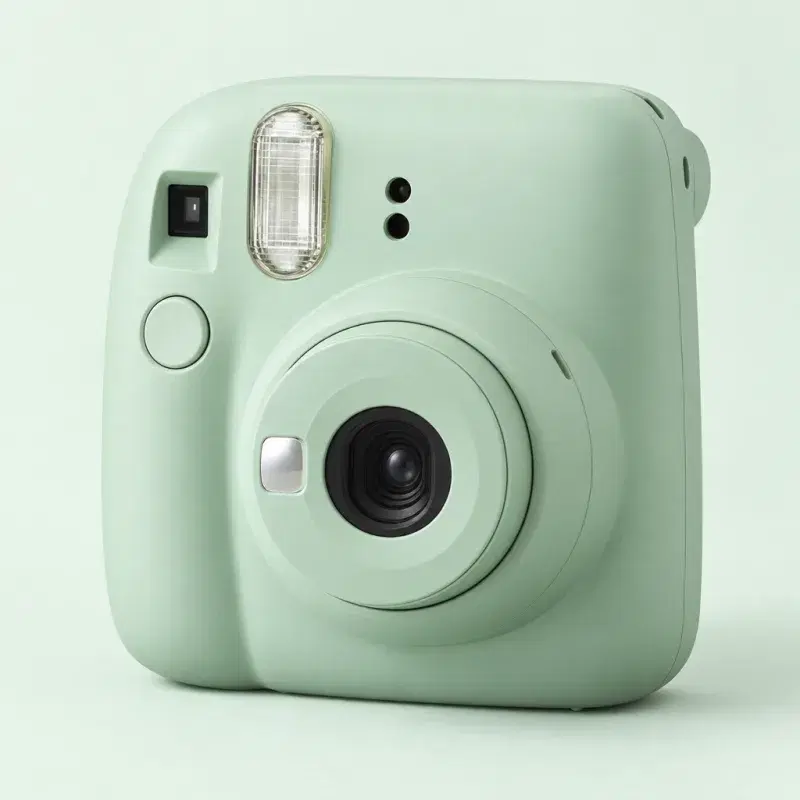 |
|---|---|---|
| Price | from €99.99 | from €71.90 |
| Format film | i-Type / 600 | Instax Mini |
| Format impression | 88×107mm | 62×46mm |
| Mise au point | Autofocus double objectif | Automatique |
| Flash | Automatique | Automatique |
| Batterie | Lithium-ion rechargeable | - |
| Batteries | - | 2×AA |
| Déclencheur selfie | - | Oui |
| Offre MN Photo Vidéo | - | 86,90 €, en stock le 24/07/2026 |
| Buy | Check current price →Read our review | Check current price →Read our review |
Polaroid Now Gen 2
Polaroid
from €99.99
Fujifilm Instax Mini 12
Fujifilm
from €71.90
Polaroid Now Gen 2 vs Instax Mini 12: Big Format or Small Price?
I'll start with the verdict because that's what you're here for. Then we'll get into the details.
For value for money, everyday use, and beginners: the 🛒 Mini 12 → wins. Films three times cheaper, lighter camera, more consistent results.
For emotion, big format, and aesthetics: the 🛒 Now Gen 2 → wins. A Polaroid print has a physical presence the Instax Mini can't match.
This isn't about "better" or "worse". It's about what you're looking for. Keep reading to understand the details.
Stéphanie's Pick
I own both, and I never bring the same one depending on the occasion.
A weekend in Biarritz in October. The Mini 12 in the bag for the pintxos, the beach, the shop windows on rue Gambetta. Twenty-five photos in two days — spontaneous, fun, imperfect. Cost: about €18 of film.
Then one evening, on the hotel terrace, facing the sunset over the Atlantic. I took out the Polaroid. A single print. We watched the image slowly appear over a quarter of an hour while drinking wine. That one print is worth more than the twenty-five Instax Minis combined. It sits on my mantelpiece.
If I could only keep one, I'd keep the Mini 12. But fortunately, I don't have to choose.
The Real Cost: Camera + Films
This is THE deciding factor for most buyers. The camera price is just the beginning — films make up the majority of the budget long-term.
| Number of photos | Instax Mini film cost | Polaroid i-Type film cost | Instax total (camera + film) | Polaroid total (camera + film) |
|---|---|---|---|---|
| 50 photos | ~€35 | ~€100 | ~€115 | ~€220 |
| 100 photos | ~€70 | ~€200 | ~€150 | ~€320 |
| 200 photos | ~€140 | ~€400 | ~€220 | ~€520 |
| 500 photos | ~€350 | ~€1,000 | ~€430 | ~€1,120 |
The numbers speak for themselves. Over 200 photos, the Polaroid costs more than double. Over 500 photos, the gap exceeds $600. Hard to ignore this reality.
For those who plan to shoot a lot (more than 100 photos a year), choosing the Polaroid is a real financial commitment. You have to be ready to accept that cost in exchange for the iconic format.
Comparison Table
| Criterion | Polaroid Now Gen 2 | Instax Mini 12 |
|---|---|---|
| Film format | i-Type / 600 (square) | Instax Mini (rectangular) |
| Photo size | 79x79mm (image) | 62x46mm (image) |
| Size with border | 108x88mm | 86x54mm |
| Camera price | ~€110-130 | ~€75-85 |
| Price per shot | ~€1.80-2.00 (8-pack) | ~€0.60-0.80 (20-pack) |
| Photos per pack | 8 shots | 10 shots |
| Power | Rechargeable USB-C battery | 2 AA batteries |
| Weight | ~434g | ~255g (without batteries) |
| Dimensions | 150x112x94mm | 104x66x38mm |
| Autofocus | Dual lens (0.4m - infinity) | Automatic + macro (0.3m) |
| Flash | Automatic | Automatic, always on |
| Self-timer | Yes | No |
| Double exposure | Yes | No |
| Selfie mirror | No | Yes |
| Tripod thread | Yes | No |
Polaroid Now Gen 2: The Icon in Large Format
The Polaroid Now Gen 2 carries on its shoulders the entire legacy of the brand that invented instant photography. And it does it rather well.
The format that changes everything
The Polaroid's image area (79x79mm, square format) is almost three times larger than the Instax Mini's. That difference is massive. The prints have a physical presence, a visual weight that turns every photo into an object. The white border with its wider space at the bottom is instantly recognizable — a cultural symbol.
For framing, displaying, gifting: the Polaroid has no equivalent in the instant photography world.
The unique look
i-Type films produce rich, slightly desaturated colors, soft contrast and warm tones. It's the "Polaroid" look that Instagram filters try to imitate without ever quite getting there. Skin tones are flattering, moods are warm.
Development takes 15 to 20 minutes to complete, even though the image starts appearing after 2-3 minutes. And you need to shield the print from direct light in the first few seconds. It's a ritual, an experience in itself.
USB-C battery and dual lens
The rechargeable battery is a real advantage over the Mini 12 (which runs on AA batteries). The dual-lens autofocus fixed the main flaw of previous generations: blurry photos. The sharpness rate is now reliable.
The self-timer and double exposure are creative bonuses missing from the Mini 12. So is the tripod thread.
The honest limits
The cost per photo (€1.80–2.00) is a real deterrent. 8 shots per pack goes fast. The bulk (434g, 150x112x94mm) rules out slipping it into a pocket. And the rendering, charming as it is, is less predictable than Instax: Polaroid film has a narrower exposure latitude.
Instax Mini 12: Everyday Efficiency
The Instax Mini 12 is the worldwide best-seller of instant photography. A well-earned status.
Compact and always in the bag
104x66x38mm, 255g. It fits in a coat pocket, a small handbag, a satchel. It's the camera you always have on you — and the best photos are taken with the camera you have with you.
Unbeatable film prices
€0.60 to €0.80 per photo in a twin pack of 20. Over 100 photos, you spend €70 on film. With the Polaroid, the same thing costs €200. The gap is too big to ignore.
And the Instax Mini film catalog is much wider: color, black and white, rainbow borders, limited editions, collaborations... Impossible to get bored.
Instax look: vivid and reliable
Bold, saturated colors, superior sharpness, strong contrast. Photos "pop" despite the small format. The film handles difficult conditions better than Polaroid, and the Mini 12's always-on flash ensures sufficient lighting indoors.
Macro mode
The 30cm close-focus (twist of the lens) is ideal for selfies, food shots, flowers and small objects. The front mirror helps frame self-portraits. The Polaroid, with its 40cm minimum distance and no selfie mirror, lags behind on this point.
Image Quality: Two Worlds
Polaroid photos have warm, slightly muted colors, soft contrast and a general softness reminiscent of the 70s and 80s. Blacks are never fully deep, whites keep a creamy texture. It's well suited to portraits and mood scenes. But very bright or very dark scenes can be a problem — the film's exposure latitude is narrow.
Instax Mini photos have vivid, saturated colors, superior sharpness and stronger contrast. It's more "punchy", more flattering at first glance. It suits selfies, parties, colorful landscapes. And the film tolerates light variations better.
Neither is objectively "better". It's a matter of taste: soft nostalgia or pop vibrancy.
Design and Portability
The Polaroid: imposing but iconic
150x112x94mm, 434g. Not a pocket camera. It needs a bag or a shoulder strap. Its retro-modern design, clean lines and discreet rainbow logo make it a design object you proudly display on a shelf. The colorways — white, black, red, blue, green, plus special editions — are bolder than the Instax pastels.
The Instax Mini: the pocket companion
Almost twice as light, significantly more compact. It slips into a jacket pocket or a bum bag. At parties, festivals, on trips — you forget it's there until the moment you want to use it.
Who's It For?
The Polaroid Now Gen 2 is for you if...
- The Polaroid aesthetic and iconic square format speak to you
- You want large-format photos to frame or display
- The vintage look with soft colors matches your sensibility
- The film budget is not your main concern
- Double exposure and self-timer interest you
- You prefer a rechargeable USB-C battery over disposable batteries
- See on Amazon
The Instax Mini 12 is for you if...
- Long-term value for money matters
- You take lots of photos and want to keep the film budget under control
- You want an ultra-compact camera to take everywhere
- You take lots of selfies (mirror + macro mode)
- You're buying a gift (more accessible entry price)
- You like pastel colors and a rich accessory ecosystem
- See on Amazon
Verdict
For value for money, the Instax Mini 12 is the clear winner. Lower purchase price, films two to three times cheaper — the most sensible option for most users. If you're a beginner, buying a gift, or want a fun and affordable camera, this is the one.
For emotion and aesthetics, the Polaroid Now Gen 2 offers an experience the Instax can't replicate. The square format, the vintage look, the print size, the development ritual. If the film budget doesn't scare you, this camera will delight you.
My default recommendation remains the Instax Mini 12. But I completely understand those who choose Polaroid for its irreplaceable character.
To buy at the best price:
- Instax Mini 12 on Amazon — My value-for-money recommendation
- Polaroid Now Gen 2 on Amazon — For lovers of the iconic format
FAQ: Polaroid Now Gen 2 vs Instax Mini 12
Are films interchangeable between the two?
No. Polaroid films (i-Type or 600) and Instax Mini films are completely different, incompatible formats. Double-check the format before ordering.
What's the size difference between photos?
The Polaroid's image area (79x79mm, roughly 62 cm²) is almost three times that of the Instax Mini (62x46mm, roughly 29 cm²). The Polaroid is square, the Instax is rectangular. Side by side, the difference is obvious.
Do Polaroid 600 films work with the Now Gen 2?
Yes. The Now Gen 2 accepts i-Type and 600 films. 600 films contain their own battery (for older vintage Polaroids), which makes them a bit more expensive. With the Now Gen 2's built-in battery, i-Type films (battery-free) are the economical choice.
Which camera for a child?
The Mini 12, clearly. More compact, lighter (255g), simpler (a single button), and above all much cheaper film. Kids take lots of photos — at €0.70 instead of €2, the budget stays manageable.
Development time?
Instax Mini develops in 90 seconds to 5 minutes depending on temperature. Polaroid i-Type takes 15 to 20 minutes for full development, even though the image starts appearing after 2-3 minutes. Important: shield Polaroids from direct light in the first few seconds.
Better quality indoors?
The Mini 12 is more consistent in low light thanks to its always-on flash and well-calibrated exposure. The Polaroid can produce beautiful indoor photos, but i-Type film is more sensitive to light variations. For reliability, edge to the Mini 12.
Black and white films available?
Yes for both. Instax offers a Monochrome film, Polaroid an i-Type Black & White film. The renderings differ: Polaroid B&W has more grain and contrast, Instax Monochrome is finer and more detailed.
Comparison written by Stéphanie for PixInstant — July 2026.