
As an Amazon Associate I earn from qualifying purchases. This site participates in affiliate programmes, including Amazon Associates and Affilae. If you purchase through our links, we may earn a commission at no extra cost to you.
Instax Wide 400 Review: The Best Wide-Format Instant Camera in 2026?
Our full Instax Wide 400 review: image quality, Wide 300 comparison, design and verdict. Worth upgrading?
In brief
The Fujifilm Instax Wide 400 scores 8/10 in our hands-on test. The Instax Wide 400 is the definitive wide-format instant camera: spectacular prints, brightness control and a tripod mount at last.
- Rating
- 8/10
- Best price
- from €146.90
Testing scope and methodology
This review reflects a real hands-on evaluation of the camera by our team: the “Tested” badge, published duration and byline attest to it.
- Tester
- Stéphanie Laurent

Rating breakdown
Pros
- ✓Spectacular wide-format prints (99x62mm)
- ✓Brightness control (lighter/darker)
- ✓Built-in tripod mount, a first for the Wide line
- ✓Improved automatic flash with compensation
- ✓Better optics than the Wide 300
Cons
- ✗Bulky, not a pocket camera
- ✗Requires 4 AA batteries (not rechargeable)
- ✗No selfie mode
- ✗Wide film costs more than Mini (about $1.50/photo)
📊 Related comparisons
🔍 Similar tests and analyses
Product info
Fujifilm
Fujifilm Instax Wide 400
130-160€
Stock checked on 24 July 2026 — verify with the retailer
The Instax Wide 400 is the definitive wide-format instant camera: spectacular prints, brightness control and a tripod mount at last.
See best price →Best price found for Fujifilm Instax Wide 400
Quick Verdict
The Fujifilm Instax Wide 400 is the camera the Wide line has needed for years. Replacing the ageing Wide 300, unchanged since 2015, it finally delivers brightness control, a tripod mount and revised optics. The result is the most impressive instant prints on the market — 99x62mm images with a physical presence that Mini and Square formats simply cannot match.
After weeks of testing at weddings, parties, landscapes and group portraits, we can confidently say the Wide 400 is a worthwhile investment for anyone who wants maximum visual impact from instant photography.
The Wide Format: Why It Matters
The Instax Wide system occupies a unique niche in the Fujifilm ecosystem. Where Mini and Square cameras focus on portability and fun, the Wide format plays the spectacle card. A Wide print is nearly twice the surface area of a Mini — 99x62mm versus 62x46mm — and the difference is immediately apparent. Faces carry more detail, landscapes are actually readable, and group photos finally work as intended.
The Wide 300, released in 2015, was beginning to show its age: no brightness control, no tripod mount, and a bulky design that felt dated next to Fujifilm's sleeker Mini models. The Wide 400 addresses each of these shortcomings without reinventing the formula. It is a measured but welcome evolution that brings the Wide line into 2026.
Priced at around $120-150, the Instax Wide 400 sits in the same bracket as the SQ40 or Polaroid Now Gen 2. It is not a beginner camera — the Mini 12 and Mini 11 remain the most accessible entry points — but it is a reasonable investment for anyone ready to step up to wide format.
Design and Build Quality
The Wide 400 does not try to be cute. It is a serious camera with a serious footprint: roughly 170mm wide, 120mm tall and 600g without batteries or film. This is a camera you wear on a strap, not slip into a back pocket.
The design has been modernised compared to the Wide 300: cleaner lines, higher-quality plastics, and a retractable lens that gives a more compact profile when powered off. The matte black finish is understated and elegant, though we would have liked to see colour options as Fujifilm offers with the Mini range.
Handling is decent thanks to the textured grip on the right side. With 4 AA batteries and a film cartridge loaded, weight climbs past 700g. This is where the new tripod mount proves its worth: for low-light long exposures or group shots where the photographer wants to be in the frame, tripod stability is a game changer.
The lens is a 95mm f/14 with two focus zones: 0.5m to 2m and 2m to infinity. It is not autofocus — you select the zone manually — but it covers the vast majority of shooting situations. The built-in flash has an effective range of 0.5 to 2.7m.
Daily Use
Loading Film
Instax Wide film loads through the rear door. The cartridge is larger than Mini but slots in without ambiguity. Each cartridge holds 10 exposures. Wide film costs roughly $1.00-1.50 per shot, notably more than Mini (~$0.70-1.00) but comparable to Polaroid. Factor in that recurring cost before buying.
Shooting Experience
The shooting experience is straightforward. Power on by extending the lens, select your focus zone (close or far), optionally adjust brightness via the lighter/darker dial, and fire. The flash triggers automatically when ambient light is insufficient.
The brightness control dial is the Wide 400's headline feature. It offers two positions: lighter and darker relative to the auto exposure. It is rudimentary compared to full manual control, but in practice it covers the most common correction scenarios: backlit scenes, snow, very dark interiors.
Wide Format in Action
This is where the Wide 400 shines. A Wide print has an unmatched visual impact. Group photos at weddings or parties are finally legible: every face carries enough detail to be identified, backgrounds retain texture, and colours are rich and saturated in the signature Instax style.
Landscapes benefit equally from the larger format. A sunset or mountain scene printed on Wide has a physical presence that even a great Mini print cannot match. That is what justifies the bulk and film cost: when the format serves the subject, the result is spectacular.
Image Quality
The Wide 400's optics have been revised from the Wide 300, and the improvement is visible. Prints are noticeably sharper in the centre of the frame, with acceptable sharpness extending into the corners. Colour saturation is classic Instax — slightly pushed, with warm tones that flatter skin and give outdoor scenes an almost nostalgic feel.
In abundant natural light, the Wide 400 produces its best work: controlled contrast, fine detail, faithful tones. In low light, the flash is effective up to about 2.5 metres. Beyond that, prints become progressively underexposed. This is where the tripod mount earns its keep.
Compared to the Polaroid Now Gen 2, the Wide 400 wins on sharpness and exposure consistency. Instax prints have finer grain and more predictable colours than Polaroid, which remains more unpredictable in its rendering.
Wide 400 vs Wide 300: The Real Differences
| Feature | Wide 400 | Wide 300 |
|---|---|---|
| Brightness control | Yes (lighter/darker) | No |
| Tripod mount | Yes (1/4 inch) | No |
| Lens | Retractable, improved optics | Fixed |
| Design | Modern, more compact when off | Classic, bulky |
| Flash | Auto with compensation | Basic auto |
| Focus | 2 zones (0.5-2m / 2m-inf) | 2 zones (0.9-3m / 3m-inf) |
| Price | ~$130 | ~$90 (clearance) |
The Wide 300 remains viable if you find it on sale under $90. For a new purchase, the Wide 400 is the logical choice.
Who Is the Instax Wide 400 For?
The Wide 400 is not for everyone, and that is precisely its strength:
- Wedding and event photographers wanting instant souvenirs with real visual impact
- Landscape enthusiasts who want prints that do justice to the scene
- Families looking for group photos where every face is visible
- Creatives using wide format for art projects, scrapbooking or wall decor
Less suited to mobile users who need a pocket camera, or tight budgets better served by an Instax Mini 12.
Verdict
The Instax Wide 400 is the camera wide-format instant fans have waited a decade for. Fujifilm has refined the formula and the result is compelling: spectacular prints, practical brightness control, a tripod mount at last and improved optics. The trade-offs — bulk, AA batteries, film cost — are amply offset by the unique visual impact of Wide prints.
At $120-150, it is a reasonable investment for anyone ready to move beyond Mini format. Our 8.0/10 rating reflects an excellent camera in its category, held back only by its size and cumulative film cost.
🛒 Check the Instax Wide 400 price on Amazon →
See also
- 📷 Instax Mini 12 Review
- ⚔️ Instax Mini vs Instax Wide
- 🏆 Best Instant Cameras 2026
- 🎞️ How to Choose an Instant Camera
Wide Film: Costs and Tips
Instax Wide film costs between $1.00 and $1.50 per photo depending on pack size. Twin packs of 20 shots offer the best per-photo value. An intensive weekend of 30 photos will cost $30-45 in film alone — the price of visual impact.
Money-saving tip: buy film in bulk. Five-twin-packs (100 photos) bring the per-shot cost down to about $0.90. Wide film is compatible between the 300 and 400, so you can stock up during sales.
Storage: keep unopened film packs in a cool, dry place away from direct sunlight. Refrigerated film lasts longer but must come to room temperature before use (wait at least 1 hour). Once loaded, use within 2-3 months for best color reproduction.
Tips for the Best Wide 400 Results
- Always use the brightness dial in backlit scenes — switch to "lighter" when shooting toward windows or in snow
- Stay within 2.5m for flash shots — beyond that, images will be underexposed
- Use the tripod mount for group selfies — set the camera on a tripod, use the self-timer, and get in the frame
- Protect unused film from heat — the Wide 400 has no internal film door lock, so avoid leaving it in a hot car
- Clean the lens regularly — fingerprints on the 95mm lens noticeably affect sharpness on wide prints
priceAlert.title
priceAlert.description
priceAlert.privacyNote
📖 In the same category
Similar products compared
| Criteria | Top choice |  | 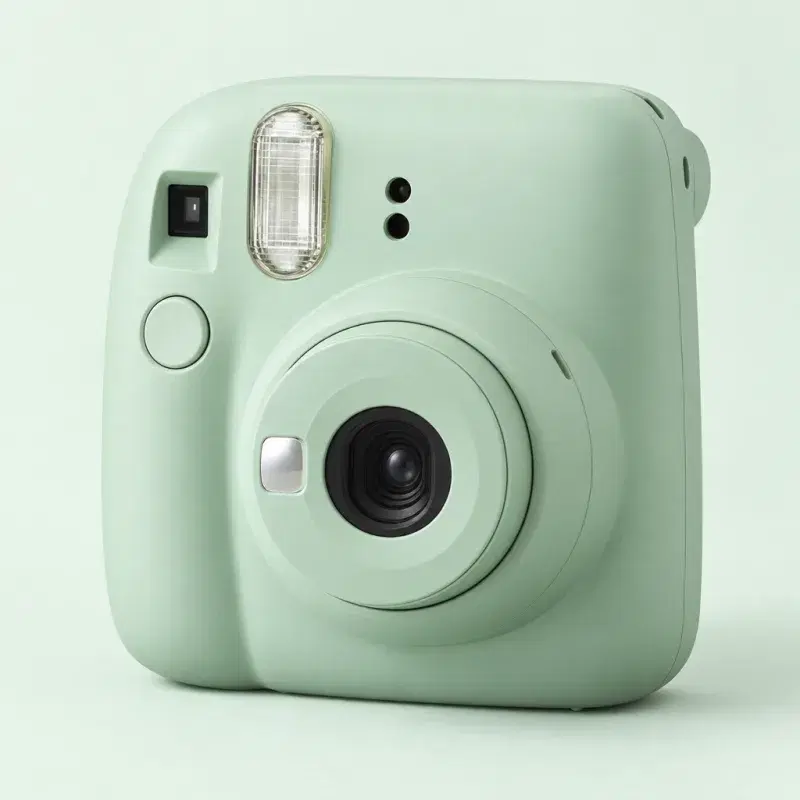 |  |  |
|---|---|---|---|---|---|
| Price | from €146.90 | 85-110€ | from €71.90 | 87-90€ | 115-135€ |
| Format film | Instax Wide | Instax Mini | Instax Mini | Instax Mini | Instax Mini |
| Format impression | 99×62mm | 62×46mm | 62×46mm | 62×46mm | 62×46mm |
| Batteries | 4×AA | 2×AA | 2×AA | 2×AA (LR6), environ 10 cartouches de 10 vues | 2×AA |
| Mise au point | Zone focus (0,5m - infini) | Automatique | Automatique | - | Fixe (0,3m - infini) |
| Flash | Automatique | Automatique | Automatique | Automatique, portée effective 0,3 m à 2,2 m | Automatique |
| Trépied | Oui (filetage 1/4 pouce) | - | - | - | - |
| Poids | Environ 600g (sans piles ni film) | - | - | 327 g (sans piles, avec film et dragonne) | - |
| Offre MN Photo Vidéo | 147,90 €, en stock le 24/07/2026 | - | 86,90 €, en stock le 24/07/2026 | - | - |
| Déclencheur selfie | - | - | Oui | - | Oui |
| Objectif | - | - | - | 2 composants, 2 éléments, f = 60 mm, 1:12,7 | - |
| Plage de prise de vue | - | - | - | 0,3 m et plus (mode Gros plan de 0,3 m à 0,5 m) | - |
| Exposition | - | - | - | Automatique, Lv 5,0 à 14,5 (ISO 800) | - |
| Retardateur | - | - | - | Oui, 2 s ou 10 s | - |
| Dimensions | - | - | - | 105,5 × 124,7 × 67,6 mm | - |
| Overall rating | 8/10 | 8.5/10 | 9.2/10 | — | 8.3/10 |
| Buy | Check current price → | Check current price →Read our review | Check current price →Read our review | Check current price →Read our review | Check current price → |
Fujifilm Instax Wide 400
Fujifilm
from €146.90
8/10
Fujifilm Instax Mini 11
Fujifilm
85-110€
8.5/10
Fujifilm Instax Mini 12
Fujifilm
from €71.90
9.2/10
Fujifilm Instax Mini 13
Fujifilm
87-90€
Fujifilm Instax Mini 40
Fujifilm
115-135€
8.3/10